Loading...
Loading...

Saudi Arabia's cinematic pioneer who turns 52 today
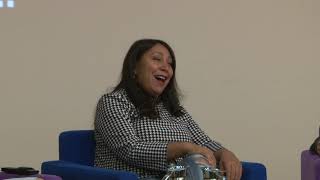
Here's the thing about Haifaa al-Mansour: she didn't just break the mold; she smashed it with a camera lens. Born on August 10, 1974, in Saudi Arabia, a place not exactly known for its blockbuster film productions at the time, she became a trailblazer in an industry that had more glass ceilings than glass slippers. Her journey from Saudi Arabia to international acclaim is as compelling as the films she directs.
Al-Mansour's story is one of grit, passion, and a little thing called defying societal norms. Who needs fairy tales when you have real-life narratives like hers? Today, as she turns 52, we look back at how she single-handedly put Saudi cinema on the map, proving once again that sometimes the most powerful stories are those that are true.
Growing up as the eighth child in a family of 12, Haifaa al-Mansour probably knew a thing or two about standing out, which came in handy later in life. Her father was a poet, which meant she was surrounded by stories from a young age. However, in a country where movies were considered taboo, al-Mansour's love for cinema was a quiet rebellion. Watching films on VHS tapes smuggled into their home, she found her calling in the flickering images on a screen.
Al-Mansour studied literature at the American University in Cairo and later pursued a master's degree in film studies in Australia. While other students were figuring out how to balance ramen noodles with textbooks, she was already plotting how to tell the stories that mattered—those of women like her, who refused to fit the conventional Saudi mold.
In 2012, al-Mansour directed Wadjda, the first feature film ever to be shot entirely in Saudi Arabia. It tells the story of a 10-year-old girl who dreams of owning a bicycle, an innocent wish in most places but a cultural faux pas in Saudi Arabia. The film was groundbreaking for its content and for its production, with al-Mansour directing some scenes from inside a van to adhere to local laws that restricted women’s movements.
Wadjda’s success was a poignant reminder that sometimes the simplest stories can resonate the most. Not only did it receive international acclaim, but it also paved the way for more Saudi filmmakers to tell their stories on their terms. And let's be honest, a story about a girl and her bike never sounded so revolutionary.
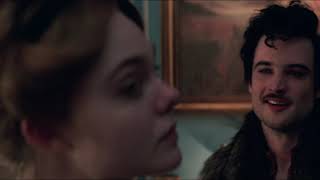
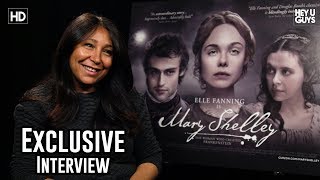
After Wadjda, al-Mansour did what any cinematic pioneer would: she set her sights on Hollywood. She directed Mary Shelley in 2017, a biopic about the author of Frankenstein, and Nappily Ever After for Netflix in 2018. In these films, she continued to explore themes of female empowerment and identity, but on a global stage.
Her transition from Saudi cinema to Hollywood was seamless, proving that storytelling, much like dreams, knows no borders. It’s almost as if she’s making a point—forging a path in one of the toughest industries while keeping her voice and vision distinctly hers.
As Saudi Arabia opens its doors wider to cinema and arts, al-Mansour stands as a guiding light for aspiring filmmakers in the region. Her influence is seen in the growing number of Saudi films making waves internationally. Al-Mansour’s work is not just about entertainment; it’s about cultural conversation, challenging norms, and looking forward while remembering where you came from.
Through her films, she’s taught us that breaking new ground often requires breaking a few stereotypes, too. Her work is a testament that art and culture are powerful tools for change, even in places where change is not always welcome.
Haifaa al-Mansour's legacy is still in the making, but it's already clear that her impact on cinema is both profound and enduring. As one of the first women to make films in Saudi Arabia, she’s inspired a generation of storytellers to find their voice and use it, regardless of the barriers they face.
Her work continues to challenge and inspire, redefining what it means to be a filmmaker from a region not traditionally associated with cinema. With each film, she challenges us to look beyond borders and stereotypes, reminding us that powerful stories come from the most unexpected places.
How did this article make you feel?
Sign in to join the discussion
 TV & Cinema
Exploring the eccentricities of Joaquin Phoenix
 TV & Cinema
From Gymnastics to Hollyoaks and Beyond
 TV & Cinema
From 'Happy Endings' to 'Magnum P.I.'
 TV & Cinema
A peek into the multifaceted life of Mariana Klaveno
 TV & Cinema
The journey of an unlikely leading man
 TV & Cinema
A look at the life of Kurt Kuenne
 +0,02