Loading...
Loading...

How a laid-back rapper from Oakland changed the game in unexpected ways.
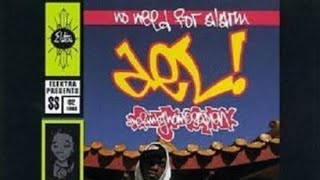
Del the Funky Homosapien, born Teren Delvon Jones, is the kind of rapper who never quite fit the mold. While others chased the spotlight, Del seemed content to hang out in the shadows, tweaking the knobs on his funky spaceship. His style was like a laid-back conversation over a beer – intelligent, humorous, and just introspective enough to remind you why you listen to music in the first place.
Breaking out in 1991 with the album I Wish My Brother George Was Here, Del introduced the world to his unique blend of offbeat humor and thought-provoking lyrics. But it was his work with Gorillaz that really propelled him into the spotlight, proving once again that genius often lurks in the most unexpected places.
Del's journey began in Oakland, California, a city known for its vibrant music scene and cultural diversity. But even in a place that celebrates uniqueness, Del stood out. Instead of following trends, he created his own path, infusing his music with the funk influences he picked up from his cousin, the legendary Ice Cube. Yep, Del's entry into the rap world was as much about family ties as it was about raw talent.
His debut album was a departure from the gangsta rap that dominated the early '90s, filled with quirky, humorous takes on everyday life. With tracks like "Mistadobalina," Del set a tone of playful rebellion that challenged listeners to think outside the box.
If there's one moment that encapsulates Del's career, it's the haunting, infectious bars he laid down on Gorillaz's "Clint Eastwood." It was 2001, and the world wasn't expecting an animated band to make such waves, but Del's feature on the track turned it into an anthem. His rhymes were like a breath of fresh air – funky, insightful, and full of the kind of wisdom that comes from not taking life too seriously.
Del's collaboration with Gorillaz wasn't just a one-off success; it was definitive proof that his style could transcend genres and demographics, speaking to anyone willing to listen.
In 2018, Del gave his fans a scare when he fell off the stage during a show in Denmark. The incident was a stark reminder of the physical toll that performing can take, even on the most experienced artists. But true to his nature, Del bounced back, using the experience as yet another lesson in his ongoing journey of self-discovery and resilience.
"I guess life sometimes throws you off your feet," Del joked in an interview afterwards, reflecting on how the unexpected often leads to new paths.
Del's influence stretches far beyond catchy hooks and clever lyrics. He's a thinker, a philosopher of the streets, always questioning, always exploring. "Music is just another way of communicating," he said in a 2015 interview. "If you can't relate to people, then what's the point?"
Today, Del continues to create and collaborate, always pushing the boundaries of what hip-hop can be. His legacy is one of innovation and daring, a testament to the power of staying true to oneself, quirks and all.
What's next for Del the Funky Homosapien? If his past is any indication, expect the unexpected. Whether he's collaborating with artists half his age or dropping surprise albums, Del is a reminder that the future can be as funky as we dare to imagine. He's never been about the glitz and glamor; for Del, it's all about the music, the message, and the madness in between.
His journey might not have followed the usual script, but that's precisely why it resonates. In a world that often demands conformity, Del remains a beacon of authenticity, a funky prophet for those willing to listen.
How did this article make you feel?
Sign in to join the discussion
 Music
From Miss Universe to Music and More
 Music
Exploring a remarkable musical journey
 Music
From animation to crooning at Carnegie Hall
 Music
How a Kiwi Became a Country Superstar
 Music
An amusing journey through an iconic career
 Music
Celebrating the man behind the sound

 +0,02