
Audley Harrison: From Street Gangs to Gold
The journey of a boxing heavyweight
Audley Harrison wasn’t just a boxer; he was a walking paradox. Born on 26 October 1971, he kicked off his life in gritty London streets, tussling with the law and barely scraping by, before morphing into a gold medal-winning athlete. Today, he turns 55, and we’re here to unpick the story of a man who traded in the street life for the boxing ring – a life that was as unpredictable as the punches he threw.
The Road to Olympic Gold
 +0,02
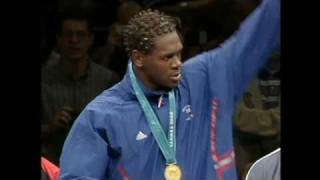
By the time he strutted into the Sydney Olympics in 2000, Harrison had already flipped the script on his life. Representing Great Britain, he became the first British boxer to snag gold in the super-heavyweight division, defeating Mukhtarkhan Dildabekov of Kazakhstan. With that one match, he didn't just win a medal; he punctured the reputation of British boxing by shaking the foundations of expectation. Everyone was finally paying attention, and Harrison was the name on everyone’s lips. This wasn’t just a triumph; it was a bloody revolution, and it marked the start of something big for him.
That Million Pound Deal

In 2001, with the gold medal gleaming in his pocket, Harrison launched into the pro ranks and made a move that would have many an agent green with envy – he signed a £1 million deal with the BBC for his first ten fights. Debuting against Michael Middleton at Wembley Arena, he knocked the poor sod out in the first round, watched by six million viewers. That’s not just prime time; that’s a nation collectively losing its shite over a heavyweight debut. But the fanfare didn’t last. A few months later, the BBC pulled the plug on boxing broadcasts, leaving Harrison stranded with high hopes and a much-reduced fanfare.
A Battering and a Comeback

By late 2006, life in the ring had started to feel like a game of musical chairs for Audley. After an underwhelming loss to Dominick Guinn, he was running on fumes. But just when it seemed he was on the skids, Harrison faced his long-time rival Danny Williams – and the gloves came off. Snatching victory by third-round knockout, he redeemed himself and re-established his name as a contender. Williams's face looked like it had met a meat grinder, and Harrison was suddenly back in the conversation for a world title shot. It was a comeback so manic, it could’ve made a Hollywood scriptwriter weep with joy.
Prizefighter Part Two

Fast-forward to 2013, Harrison was back in the limelight, though the road had been rocky. He competed in the second iteration of the Prizefighter tournament, an eight-man knockout event, and to the surprise of many, he emerged victorious once again, defeating Derric Rossy in the final. Yes, he may have occasionally looked like the bloke at the pub who keeps insisting he still can run the 100 meters, but damn, he delivered when it mattered. With this win, he proved the naysayers wrong: Harrison could deliver moments of greatness, even if they were juxtaposed with sizeable amounts of head-scratching defeats.
The End of the Line
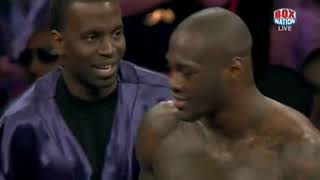
But like all good tales, there’s a bittersweet twist. Just a few months after that Prizefighter victory, he faced Deontay Wilder, a nightmare in the ring who landed punches like they were going out of style. In April, Harrison was knocked down just 70 seconds into the round, a quick, brutal reminder of the finite nature of a boxing career. When he finally announced his retirement on 1 May 2013, it wasn’t just the end of a chapter; it was the closing of a book that had more plot twists than a soap opera. A few weeks later, he tried to come back – but the boxing world had moved on.
How loud do you turn Audley up?
Swipe to turn it up
Log in to vote
Comments (0)
Sign in to join the discussion


