Loading...
Loading...

A life shaped by power and profit
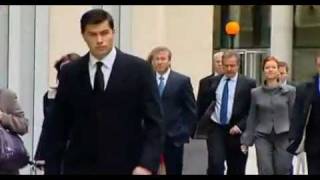
Roman Abramovich, now a billionaire with a portfolio stretching from oil to football, was once a child of tragedy. Born into a world of loss in the Soviet Union, he became an orphan before he could grasp the meaning of the term. By the tender age of three, he had witnessed the brutality of existence with both parents gone, crushed or consumed by the very system that promised the revolution's sweetness. Today, he turns 60, and we are apparently the ones who remembered.
His foray into the glittering world of Russian oligarchs began rather modestly—with a mere $100 million pay-out for a stake in Sibneft. Imagine that: a life ignited by a paltry sum when you consider the sell-off of a country's assets post-Soviet Union. With Boris Berezovsky as his particular angel of fortune, he outmaneuvered others at a rigged auction, acquiring something that would soon be worth billions. He sold it to the government in 2005 for $13 billion, which is the kind of profit that makes one question the very nature of legal commerce.
By the turn of the millennium, Abramovich was firmly entrenched in the oligarch culture, which was reminiscent of a gladiatorial arena, except the battles were fought with money and influence rather than swords. Enter the 'aluminum wars,' a time when life expectancy was apparently negotiable. In 2000, he bought aluminum assets from the Reubens, who were fleeing the increasing violence. The irony? Abramovich initially hesitated to dabble in such a bloody business, only to find himself securing a merger that would dominate the market. Peacekeeper or opportunist? Perhaps both, but in Russia, ethics are always secondary to profit margins.
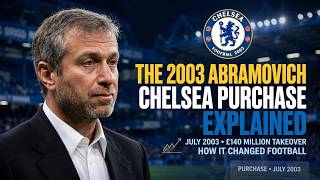
In June 2003, Abramovich turned his eyes from oil wells to football fields, throwing a stunning $190 million to acquire Chelsea Football Club. This was not merely a purchase; it was an investment into a brand as much as an affinity for the beautiful game. The club underwent a transformation under his reign, propelled by a personal fortune that dwarfed many nations’ GDPs. Yet, as much as Abramovich tossed money into the transfer market, it was also a personal gamble: that the English Premier League could be a playground for Russian oligarchs, where might triumph over meritocracy.
In the realm of powerful men, friendships can dissolve faster than sugar in hot water. When Boris Berezovsky attempted to recoup losses through a lawsuit, it turned into a courtroom drama that could make Hollywood scripts blush. Berezovsky accused Abramovich of breach of trust, but in the end, the court found him unreliable—a judgment critics quipped was perhaps uncomfortably reflective of Russian politics. The judge's dismissal of the case was more than just a victory for Abramovich; it was a wink and nod from the establishment that there is order amidst chaos. Because in Russia, truth is often dictated by the weight of the wallet.
Fast forward to 2022, when the world seemed to hold its breath as the geopolitical game turned deadly serious. With the conflict in Ukraine escalating, the West returned to old habits—sanctioning anyone with ties to the Kremlin, and there was Abramovich, once again in the crosshairs. It's ironic, isn't it? A man who built an empire on the ruins of a fallen state was now caught in the crossfire of another's ambitions. Allegedly spending most of his time in Turkey, far from the headlines but still entangled in a web of interests, Abramovich’s life has become a poignant reminder that power is fleeting and alliances, most often, transactional.
How loud do you turn Roman up?
Swipe to turn it up
Log in to vote
Sign in to join the discussion
 Politics
A journey from chaos to the presidency
 Politics
Navigating the complexities of Cambodian leadership
 Politics
From courtroom to cabinet, a look at the journey of a Czech politician.
 Politics
A look back at the political journey of a modern German statesman
 Politics
Exploring the life of Jinnih Beels as she turns 50 today, a testament to resilience and drive.
 Politics
From a family legacy in Iran to the heart of British politics, it’s a tale that defies expectations.
 +0,02