
Loading...
Loading...

Remembering the legacy of a brave serviceman
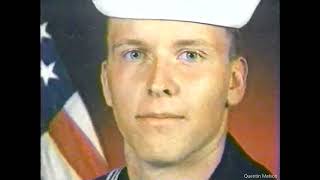
On October 27, 1992, Allen R. Schindler Jr. was brutally murdered in Sasebo, Japan, as a result of a hate crime that highlighted the ongoing discrimination against LGBTQ individuals in the military. His death became a focal point in the national dialogue regarding the treatment of gay servicemen and women, ultimately contributing to changes in military policy. Today marks the anniversary of his death, and BOGX remembers him for his courage and the lasting impact of his story.
Allen Schindler enlisted in the United States Navy during his junior year at Bloom High School, following in the footsteps of a family with a rich naval history. After graduating from Naval Station Great Lakes in November 1988, he began a four-year stint that would take him across several ships, including the USS San Jose and the USS Midway. His time aboard the USS Midway was particularly significant; it was during this period that he earned a patch for his involvement in Operation Desert Storm. However, the atmosphere shifted dramatically upon his transfer to the USS Belleau Wood in December 1991.
By March 1992, Schindler began facing severe harassment aboard the USS Belleau Wood. Reports indicated that he was subjected to anti-gay comments and acts of intimidation, including incidents where his locker was glued shut. Despite having reported this harassment to his superiors multiple times, no action was taken. In September, feeling increasingly unsafe, he declared his sexual orientation to his commanding officer and requested a transfer and discharge. However, his request was met with a denial, forcing him to remain on the ship in an environment that felt hostile and threatening.
On the evening of October 27, 1992, Schindler was attacked by Terry M. Helvey and his accomplice, Charles E. Vins, in a public restroom near the U.S. naval base in Sasebo. Helvey brutally assaulted Schindler, delivering blows that would ultimately prove fatal. Witnesses reported hearing the sounds of the attack, with one shipmate describing seeing Helvey stomp on Schindler's throat. Despite being quickly transported to a medical clinic, Schindler succumbed to his injuries shortly after midnight. The details of his death revealed the horrific extent of the violence he endured and illustrated the dangers faced by LGBTQ individuals in the military.
The trial of Terry Helvey began soon after Schindler's murder, with Helvey denying that his actions were motivated by Schindler's sexual orientation. However, evidence from the investigation suggested otherwise, revealing Helvey's deep-seated hatred toward homosexuals. On May 3, 1993, he pleaded guilty to unpremeditated murder to avoid a potential death sentence and was subsequently sentenced to life in prison. Meanwhile, the Navy faced public scrutiny for its failure to address the harassment Schindler experienced, leading to calls for accountability and reform within the military.
In the wake of Schindler's murder, his mother, Dorothy Hajdys-Clausen, became a prominent advocate for LGBTQ rights, using her son's story to highlight the need for change within the military. The events surrounding his death inspired numerous candlelight vigils and marches across the country. His story was featured in the 1997 TV film Any Mother's Son, which won a GLAAD Media Award in 1998. Today, Schindler is remembered as a symbol of the struggle for equality and human rights, and his legacy lives on through the continued fight against discrimination in the military and beyond.
How loud do you turn Allen up?
Swipe to turn it up
Log in to vote
Sign in to join the discussion
 RIP
Remembering a beloved Chinese television host
 RIP
A life marked by talent and tenacity
 RIP
A look back at the life and influence of a Japanese rock pioneer.
 RIP
Remembering the Afghan police chief on the anniversary of his death
 RIP
Remembering a rugby warrior on the anniversary of his passing.
 RIP
Remembering the British racer whose passion knew no speed limits.
 +0,02