Loading...
Loading...

Navigating Politics and the Unexpected
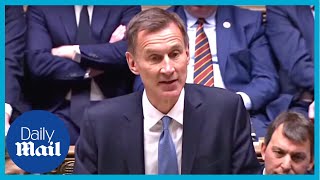
It’s a curious quirk of fate that the man who dealt with the NHS and then the economy spent a chunk of his life attempting to export marmalade to Japan. Most politicians scour for votes; Hunt seems just to be scrounging for something that works. Today, he turns 60, and BOGX is apparently among the few who remembered this milestone of mediocrity.
During the 2005 general election, Hunt emerged as the MP for South West Surrey, claiming 50.4% of the vote. A triumph at first glance, but nothing like breaking records or changing lives. The real kicker? His majority of 5,711 didn’t shake the ground of British politics; it merely added another figure in the ledger of a perpetual establishment. Hunt slid into Parliament like a man trying a new suit—everything fits, yet there's something uncomfortable about it.
By May 2010, Hunt had wormed his way into the cabinet as the Secretary of State for Culture, Olympics, Media, and Sport. It was during this tenure he had the gall to attribute hooliganism to the Hillsborough disaster, a comment that didn’t just raise eyebrows but nearly knocked them off many faces. Perhaps in his mind, it was a riff on 'a football culture'; in reality, it was a spectacular lack of judgment. His mishaps would soon blend into a confusingly complex legacy, conflicting with the whimsical idea of a glorious Olympic Games.
Fast forward to 2016, when Hunt, as Secretary of Health, instituted a controversial contract for junior doctors that sparked strikes after 40 years of silence. The absurdity of this conflict became the new normal, mirroring the chaos of the NHS’s existence—can you solve a problem by making people strike for their right to work? Apparently, yes. It seemed Hunt had a knack for making things difficult, like teaching a cat to fetch; all it did was claw the couch.
Holding the record as the longest-serving Health Secretary in British political history might sound prestigious, unless you consider that the title came with a hefty dose of chaos. From overseeing a pandemic response as the Chair of the Health and Social Care Select Committee to invoking protests with the junior doctors’ contract—Hunt was always at the center of unfolding dramas, much like a soap opera star only without the charm or charisma. His fame, or infamy, was built on the cracks of a health system trying to remain standing amidst the pressure.
In October 2022, Hunt was appointed Chancellor of the Exchequer—a role akin to juggling chainsaws while blindfolded. He inherited a budget from Liz Truss that resembled an IKEA instruction manual: complicated and nearly impossible to figure out. In 2023, he presented two budgets filled with figures that would make a mathematician weep, all while the nation braced for fiscal impact like a toddler anticipating a storm. His tenure showcased a breathtaking level of smoke and mirrors, providing a case study on how to spin tales while balancing the economy on a pinhead.
Now, as Hunt gears up to accept another year of life, he sits in the shadows of a lost general election to Labour under Keir Starmer. The third most powerful right-wing figure in 2023? Perhaps power is but a game of musical chairs where those without seats seem to have the best views. With a goal of being a Shadow Chancellor in the caretaker cabinet and his past largely behind him, the question remains: does he continue hunting for relevance, or will he settle into the quiet of political obscurity? It’s a fine line.
How loud do you turn Jeremy up?
Swipe to turn it up
Log in to vote
Sign in to join the discussion
 Politics
Navigating politics with a stethoscope
 Politics
A life shaped by power and profit
 Politics
A journey from chaos to the presidency
 Politics
Navigating the complexities of Cambodian leadership
 Politics
From courtroom to cabinet, a look at the journey of a Czech politician.
 Politics
A look back at the political journey of a modern German statesman

 +0,02