Loading...
Loading...

Capturing the world's conflicts with compassion and courage.
There are those people whose presence is felt long after they've left the stage — James Foley was undeniably one of them. Known for his intrepid spirit and dedication to journalism, James was born on October 18, 1973, in Rochester, New Hampshire. Even as a child, he showed a keen interest in storytelling, often penning little tales that captured the ordinary with extraordinary detail.
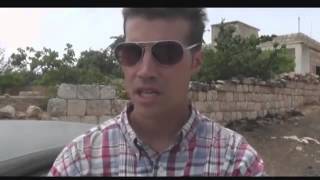
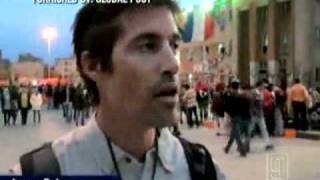
Foley's work took him to the very edges of human experience, where he chronicled the stories of people living in conflict zones. Driven by a belief in truth's power to effect change, he became a voice for the voiceless. His reporting was as much about the humanity he encountered as it was about the war itself.
Before taking up the journalist's pen, James spent time as an educator. He taught at low-income schools, where he learned firsthand about resilience and the human spirit's indomitable nature. It was this experience that propelled him towards journalism; he wanted to tell stories that mattered, stories that could invoke empathy and understanding.
In 2008, Foley earned a Master of Fine Arts in creative writing from UMass Amherst, which he humorously claimed was just an excuse to write stories about bars he frequented. But humor aside, that degree was his first step into the world of professional storytelling. Soon, he was reporting from some of the world's most dangerous hotspots, including Iraq, Afghanistan, and Libya.
The world took notice of James Foley during the Arab Spring. Armed with little more than a camera and an unyielding sense of justice, he captured images and stories from the heart of Libya's uprising. These weren't just dispatches from the frontlines; they were vivid narratives of ordinary people facing extraordinary situations.
His ability to provide context to chaos, to humanize the headlines, was unparalleled. Foley's work was not just a reflection of the violence; it was a testament to the will of people fighting for their freedom.
James knew the risks of his work, perhaps more than anyone. In 2012, he was captured in Syria but released after 44 days. Instead of retreating to safety, he returned to the field, driven by a profound sense of responsibility. "Journalism is journalism," he once said. "If I had the choice, I wouldn't change a single thing."
In November 2012, James was abducted by ISIS militants while reporting in Syria. Tragically, on August 19, 2014, he was killed. His death shocked the world and underscored the lethal risks journalists face in conflict zones.
James Foley's legacy is one of courage and compassion. In his honor, his family established the James W. Foley Legacy Foundation, which advocates for the safety of journalists and the protection of Americans held hostage abroad.
Foley's life may have been cut short, but his impact endures. He showed the world the power of fearless journalism and the importance of bearing witness. For young journalists inspired by his story, his message is clear: never stop telling the truth, even when it's dangerous.
In the words of his mother, Diane Foley, "James taught us to live without regret and to find joy in life’s simplest pleasures." As we remember him today, we celebrate not just his work, but the passion and integrity he brought to every story he told.
How loud do you turn James up?
Swipe to turn it up
Log in to vote
Sign in to join the discussion
 RIP
Remembering the legacy of a brave serviceman
 RIP
Remembering a beloved Chinese television host
 RIP
A life marked by talent and tenacity
 RIP
A look back at the life and influence of a Japanese rock pioneer.
 RIP
Remembering the Afghan police chief on the anniversary of his death
 RIP
Remembering a rugby warrior on the anniversary of his passing.
 +0,02